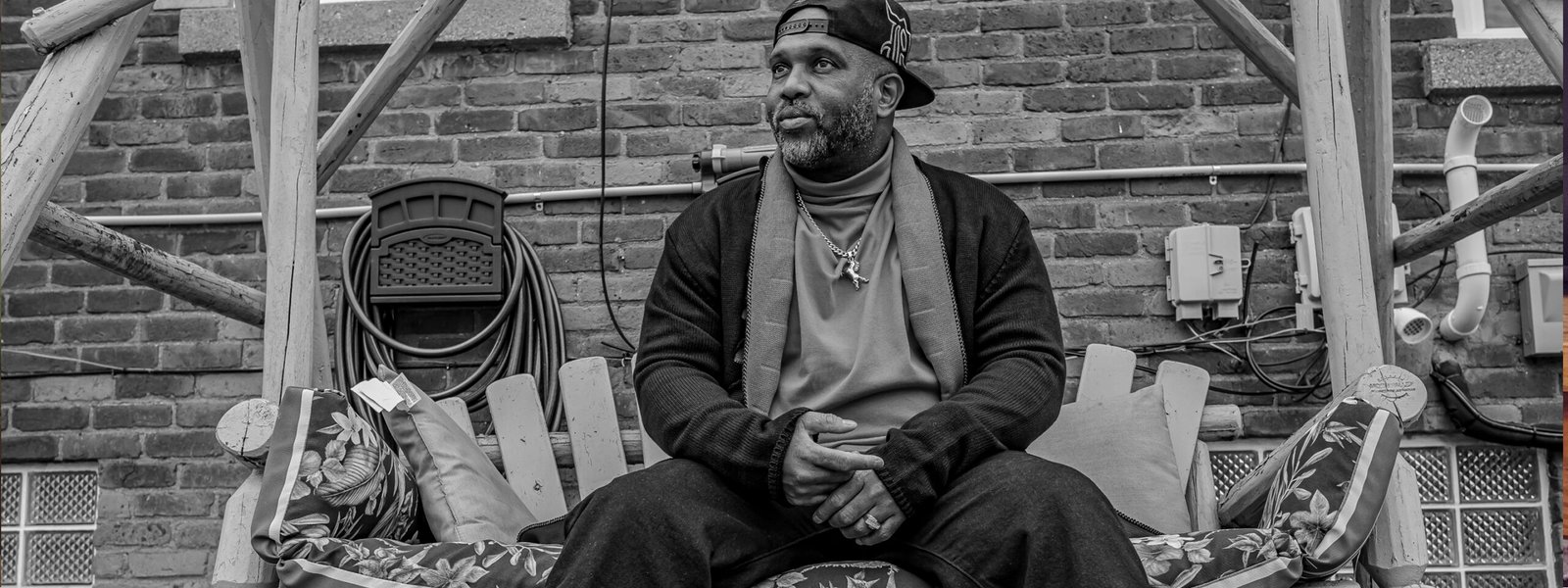
JLWOP in Michigan
Life without parole means life in prison with no opportunity for release
Pre-1970s
- Dating back as far as the 1930s, Michigan has included 17 year olds in adult sentencing schemes and given prosecutors the discretionary power to prosecute them in juvenile or adult court.
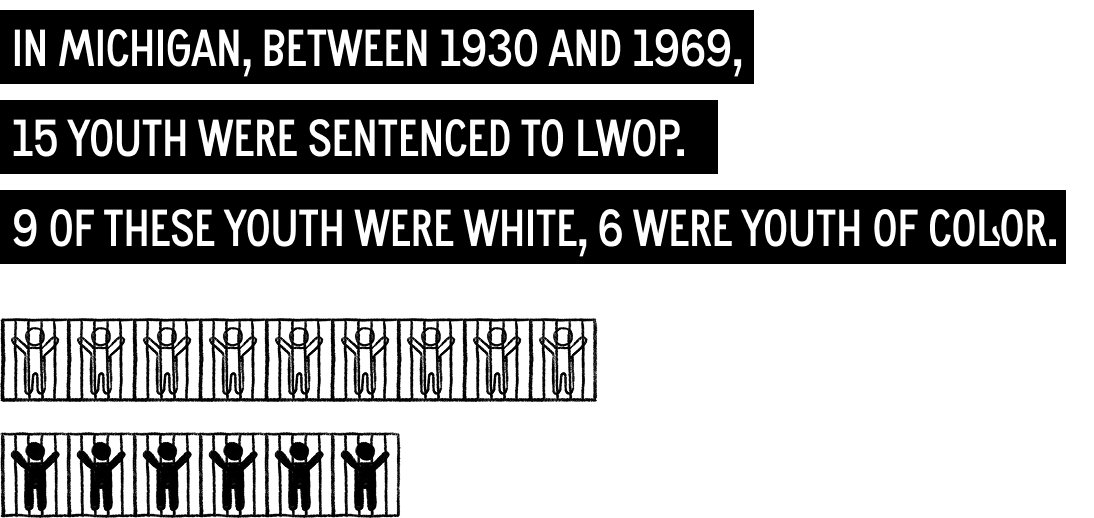
- There were 15 youth sentenced to JLWOP between 1930 and 1969, 9 white youth and 6 youth of color.
- Youth under 17 had to be waived into adult court via a waiver hearing and judicial order.
1970's
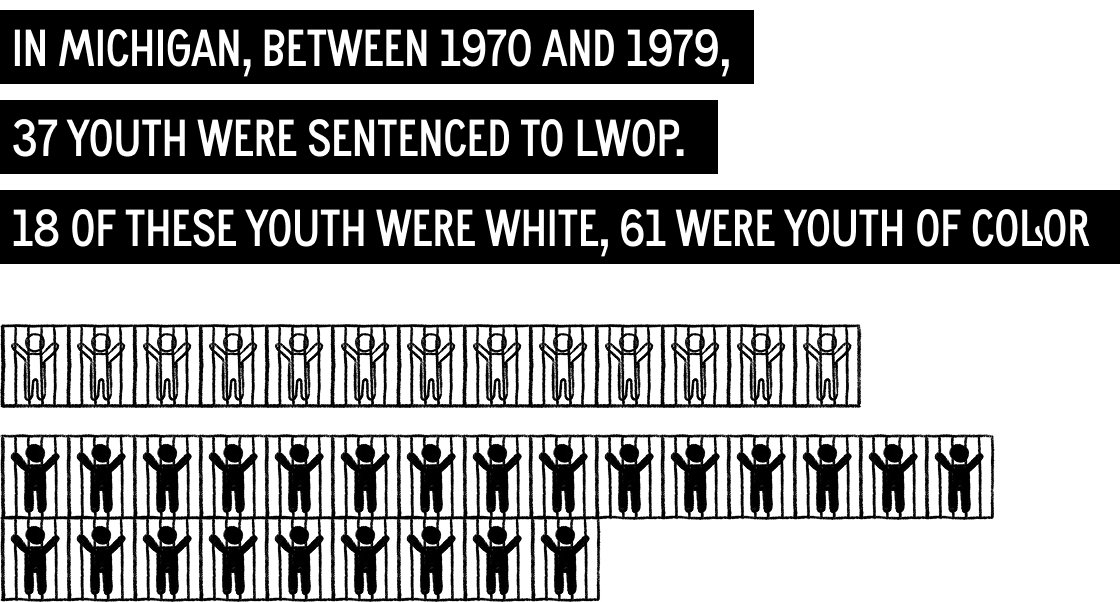
- There were 37 youth sentenced to JLWOP between 1970 and 1979, 13 white youth and 24 youth of color.
- JLWOP came into greater use as social unrest, civil rights struggles, and criminalization of people of color escalated through the expansion of the criminal legal system.
- In People v. Lorentzen in 1972, the Michigan Supreme Court struck down a 20-year mandatory minimum sentence for marijuana sale as cruel or unusual, citing disproportionality and evidence that shorter sentences better serve nonviolent offender rehabilitation.
1980's
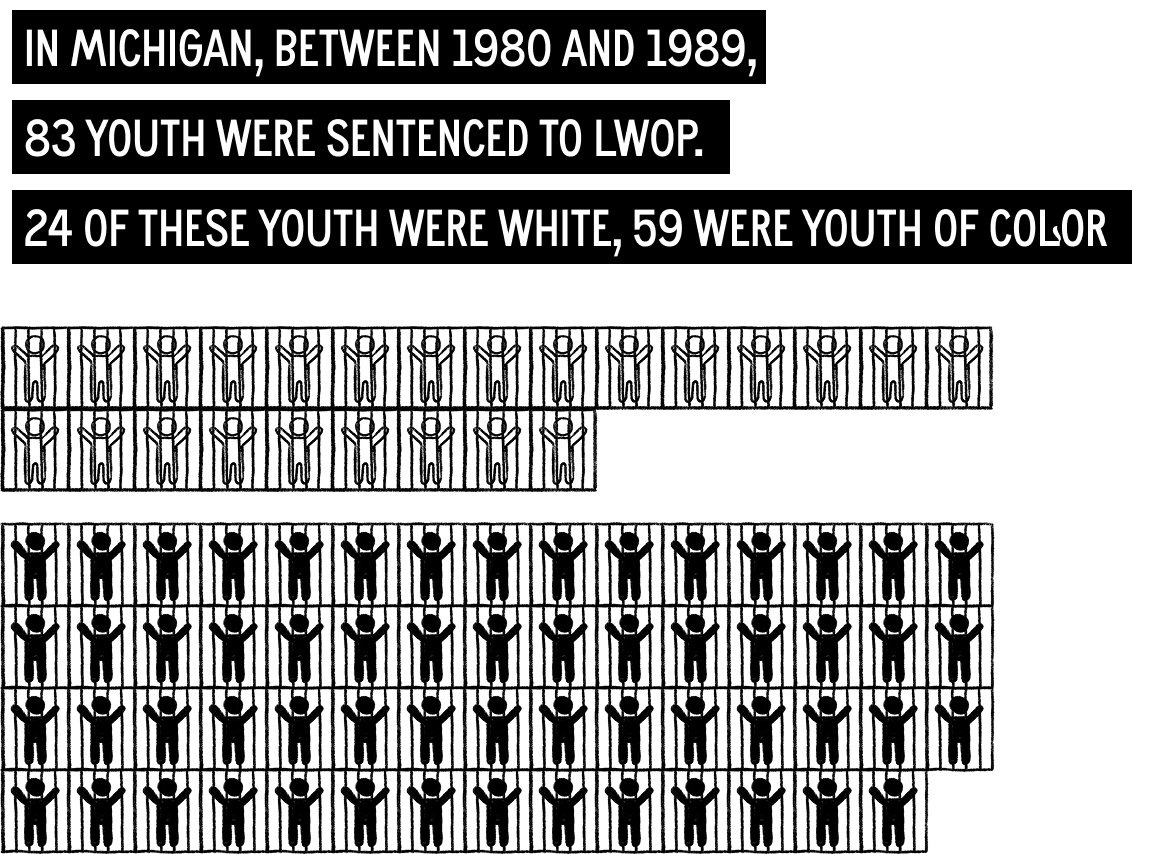
- 83 youth were sentenced to JLWOP between 1980 and 1989, more than double the preceding decade: 24 white youth and 59 youth of color.
- In 1988, the Michigan legislature expanded automatic waiver to include 15 and 16 year olds, giving prosecutors sole discretion to decide which youth would be tried in juvenile court and which would be tried in adult court.
The new law delivered prosecutors a power previously held by juvenile court judges in Michigan and eliminated any systemic process to determine if a youth was an appropriate fit to be treated as an adult. Prior to the new legislation, if a prosecutor wanted to try a juvenile in adult court, a judge made that decision. An evidentiary waiver hearing would take place where the judge was required to consider “the seriousness of the offense, the youth’s maturity and life experiences, prior juvenile record, amenability to treatment in a youth facility, as well as public safety and welfare” before permitting a child to be tried in adult court.
1990's
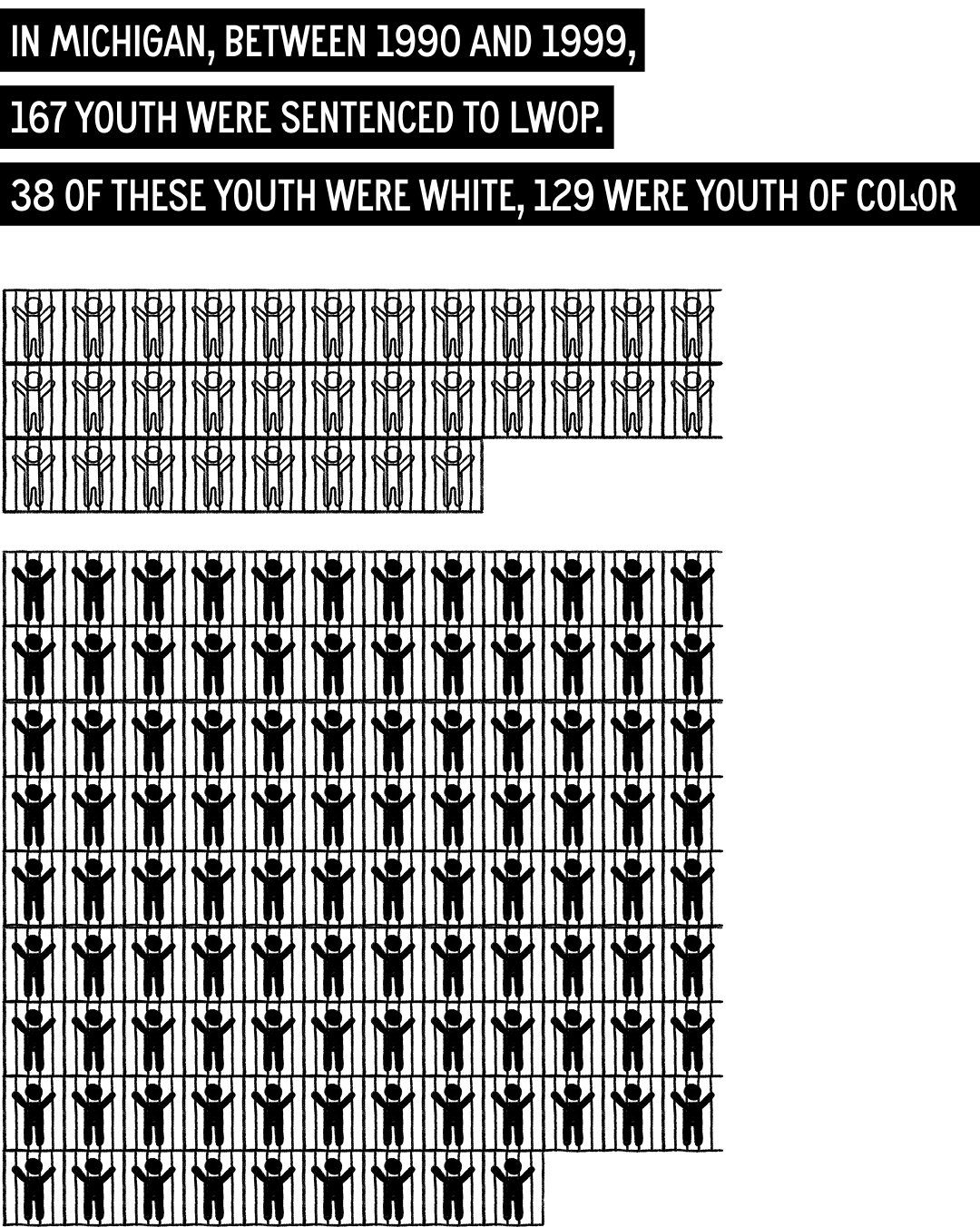
- 167 youth were sentenced to JLWOP between 1990 & 1999: 38 white youth and 129 youth of color.
- In 1995, the Michigan legislature passed the Juvenile Justice Reform Act, expanding automatic waiver to include 14-year-old children.
“We wanted to let thugs know that they can’t hide behind their mother’s apron. Now, 25 years later, I think locking youthful offenders up for life is ridiculous.” – Former Representative Burton Leland, a Democrat from Detroit, repudiating his initial support of the 1995 Juvenile Justice Reform Act
- In 1995, the juvenile “super predator” theory took hold around the U.S.
Driven in great part by criminologists and sociologists at prestigious universities around the country, Americans were warned of a coming wave of juvenile crime perpetrated by Black and Latino youth. In 1995, John J. Dilulio, Jr., then a professor of criminology at Princeton University, predicted in a handful of nationally syndicated interviews that a wave of “super predator” children were coming from the inner cities. He warned of “tens of thousands of severely morally impoverished” and super crime-prone young males… [o]n the horizon.”
- Nationally and in Michigan, more children were sentenced to die in prison during the 1990s than any decade in American history. Between 1992 and 1997, nearly every state changed its laws to increase penalties for juvenile offenders and expand automatic waiver into adult court.
2000's
By 2000, the trend began to shift. Juvenile crime rates had dropped, not risen, as predicted. In 2001, Dilulio formally rescinded his theory and apologized, but the damage was long done, driving racist “tough on crime” state and federal sentencing policy that swept thousands of juveniles into the adult system.
Legal and social advocates in Michigan and around the nation worked tirelessly to correct false information driven by the “super predator” theory, shift the “tough on crime” culture of the 1990s, and reestablish a system where young people are treated with dignity and regarded with consideration of their literal & developmental age.
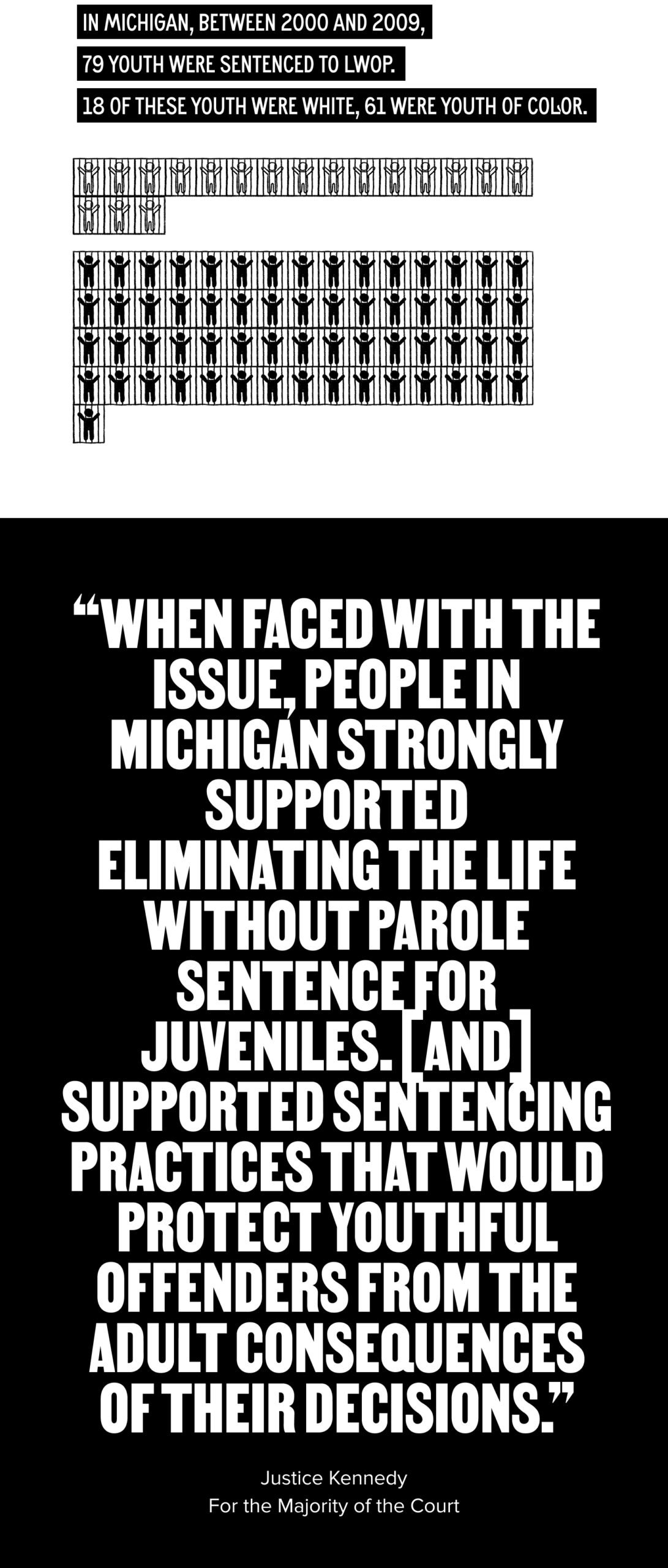
- 79 youth were sentenced to JLWOP between 2000 and 2009: 18 white youth and 61 youth of color.
- In 2001, criminologist John J. Dilulio retracted his “super predator” theory and apologized.
- In Roper v. Simmons in 2005, the U.S. Supreme Court banned the death penalty for people under 18 years old.
Justice Kennedy, writing for a majority of the Court, wrote that “[r]etribution is not proportional if the law’s most severe penalty is imposed on one whose culpability or blameworthiness is diminished, to a substantial degree, by reason of youth and immaturity.”
While Roper did not apply to other extreme sentences like JLWOP, it laid the foundation for a science-based consideration of youth and their hallmark immaturity that has since extended to other extreme treatment and sentencing of youth.
- In 2006, polling and focus groups were conducted in Michigan, asking “how should we treat Michigan youth involved in homicide crimes?” Overwhelmingly, polling revealed strong public opposition to the law requiring all 14 to 17 year olds convicted of a first-degree homicide to spend the rest of their lives in adult prison without an opportunity for parole.
The poll findings were that, “When faced with the issue, people in Michigan strongly supported eliminating the life without parole sentence for juveniles… [and] supported sentencing practices that would protect youthful offenders from the adult consequences of their decisions.”
- In 2008, the Michigan House of Representatives passed legislation that would have eliminated juvenile life without parole sentences for those under 18 years old. The Senate Judiciary Committee refused to release the bill for a vote and the law remains in place.
2010's
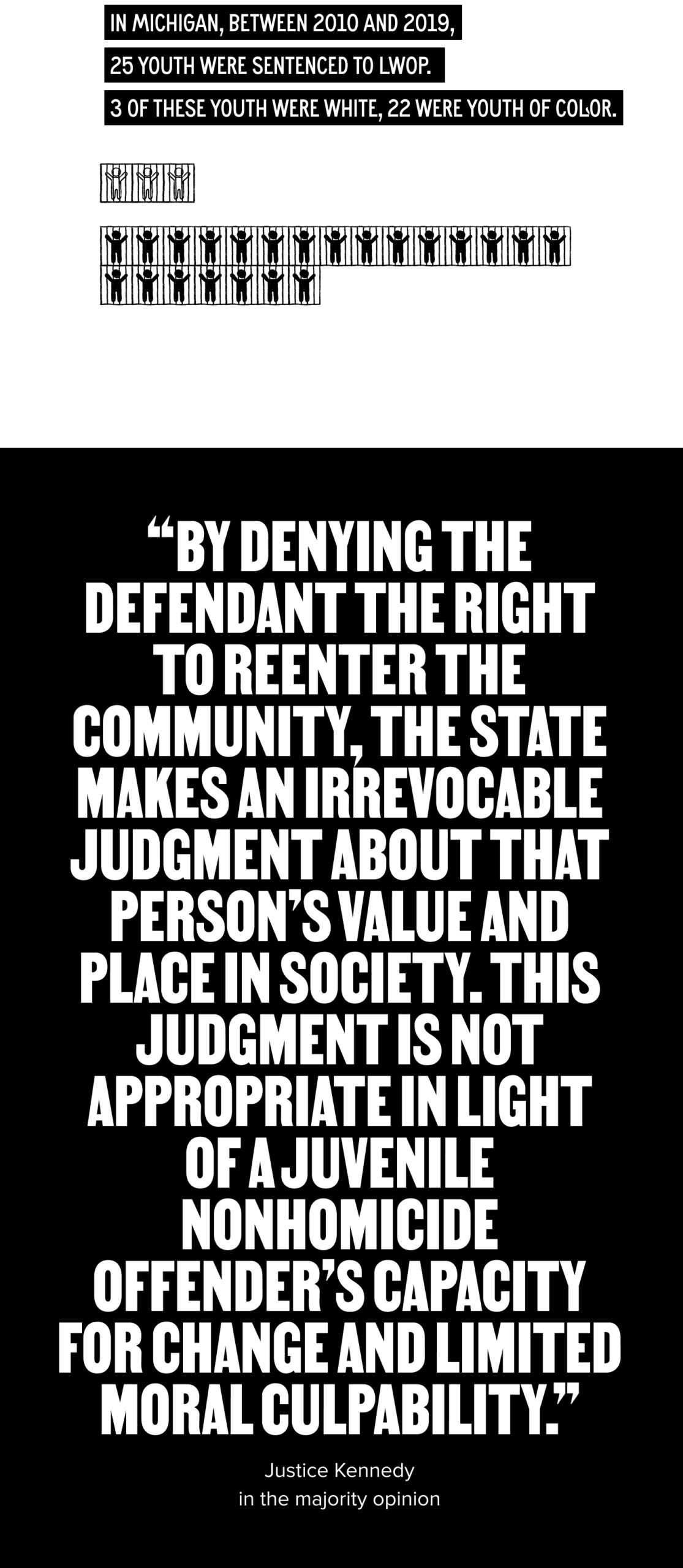
- 25 youth were sentenced to JLWOP between 2010 and 2019: 3 white youth and 22 youth of color.
- In Graham v. Florida (2010), the U.S. Supreme Court banned life without parole sentences for youth who commit non-homicide offenses. That is, youth who committed a crime that did not result in the death of another person could no longer be punished with life without parole.
Justice Kennedy, in the majority opinion, wrote, “By denying the defendant the right to reenter the community, the state makes an irrevocable judgment about that person’s value and place in society. This judgment is not appropriate in light of a juvenile nonhomicide offender’s capacity for change and limited moral culpability… For juvenile offenders, who are most in need of and receptive to rehabilitation, the absence of rehabilitative opportunities or treatment makes the disproportionality of the sentence all the more relevant.”
Again, while the Court’s decision left LWOP in place for homicide offenses, the science-based reasoning further grounded considerations of justice in matters of proportionality and measures of culpability. As social scientists had overwhelmingly found for decades, when given the opportunity and support, young people inevitably grow up; taking this research into consideration, the Court concluded that justice neither required nor justified lifetime incarceration when change and growth is inevitable.
- By 2011, two states had outright banned JLWOP and three had no one serving the sentence.
- In Miller v. Alabama in 2012, the U.S. Supreme Court ruled that LWOP is a disproportionate sentence for the vast majority of youth. The Court ruled that no juvenile defendant may face a mandatory sentence of life imprisonment without the possibility of parole and that youth must be considered as a mitigating factor.
In many ways, the Court’s opinion in Miller directed judges and prosecutors back to the same factors considered in the juvenile waiver process – requiring judges to explicitly consider issues of development and maturity, life circumstance, culpability, and condition – prior to the imposition of an LWOP sentence.
While Miller didn’t speak to retroactivity, based on the logic of the Court, thousands of juvenile lifers serving mandatory LWOP sentences around the country suddenly found themselves serving unconstitutional sentences. Legal advocates quickly filed arguments that Miller should apply retroactively and that people serving mandatory JLWOP sentences should receive a new day in court.
- Four years later, in Montgomery v Louisiana (2016), the U.S. Supreme Court ruled that Miller applies retroactively to thousands of youth around the country serving LWOP sentences.
In Michigan, suddenly hundreds of juvenile lifers were entitled to relief. Today, there are still 19 incarcerated individuals awaiting resentencing of their mandatory LWOP sentences, ruled unconstitutional nearly a decade ago.
- In 2019, a “raise the age” law passed in Michigan, removing 17 year olds from the adult penal code, which had functionally treated 17 year olds as adults for generations.
Through the rest of the decade, advocates in Michigan and around the country worked to extend the legal and scientific precedents articulated by the U.S. Supreme Court to youthful offenders with other extreme sentences.
2020's – so far
This decade has brought several landmark decisions in Michigan, extending protections to juveniles and emerging adults between 18 and 21 years old.
- In People v Parks (2022), the Michigan Supreme Court ruled that mandatory LWOP sentences are cruel or unusual when applied to 18 year olds. The court found that there is no significant difference between a 17 year old and 18 year old developmentally and therefore the same protections of youth and opportunities for demonstrating mitigating circumstance at resentencing hearings should be applied as in Miller.
- In People v Boykin (2022), the Michigan Supreme Court held that “sentencing courts must consider youth as a mitigating factor” even before sentencing a child to a term of years.
- In People v Stovall (2022), the Michigan Supreme Court found that a sentence of life in prison with the possibility of parole for a defendant who committed second-degree murder while a juvenile is unconstitutional.
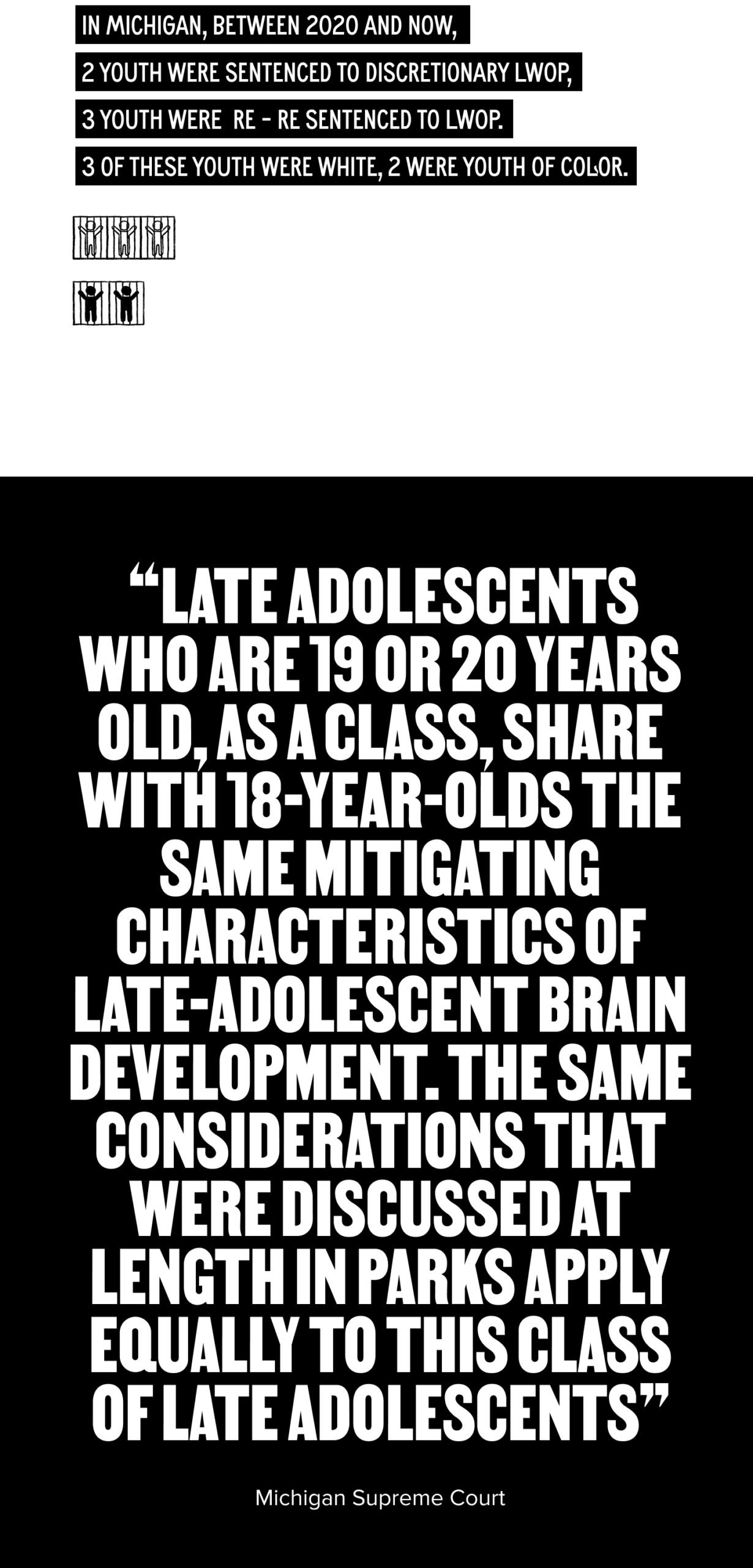
- In People v. Taylor and People v. Czarnecki (2025), the Michigan Supreme Court extended its Parks holding, that mandatory LWOP sentences are unconstitutionally cruel or unusual for 18 year olds, to people who were 19 or 20 years old at the time of their crimes and held that its decision should apply retroactively.
The court wrote: “Late adolescents who are 19 or 20 years old, as a class, share with 18-year-olds the same mitigating characteristics of late-adolescent brain development. The same considerations that were discussed at length in Parks apply equally to this class of late adolescents.”
The efforts to bring the United States into compliance with evolving standards of decency has resulted in a majority of states no longer viewing LWOP as an acceptable sentence for juveniles. Twenty-eight states have banned the practice entirely, while five have ceased to use it and have nobody serving the sentence.
The first half of the current decade has affirmed an increasingly measured, humanizing and proportionate justice for people who committed crimes as young people. Many opinions from courts across the nation have raised standards, increased protections of youth in matters of punishment and sentencing, and strongly affirmed the hope of reformation and maturity inherent in all developing people. Put simply, every young person has rehabilitative potential, and law and sentencing policies increasingly reflect that truth.
Even so, Michigan’s laws still allow prosecutors to charge youth as if they were adults. Michigan remains in the minority of states who have not yet abolished life without parole sentences for young people.
To date, 209 of Michigan’s juvenile lifers have successfully reentered into the community after receiving a meaningful opportunity for review. The population’s overall success is underscored by a recidivism rate under 1 percent. The vast majority of people who were previously sentenced to die in prison, for crimes they committed as juveniles, have built meaningful, healthy, and positive lives in their communities – many doing work that directly confronts the very factors that contribute to youth violence. Around the nation, former juvenile lifers have proven uniquely qualified to help break cycles of harm and dysfunction in their communities, applying the wisdom of lived experience to some of the most challenging dynamics our communities face.
Adultification BIAS
is a term used in psychology and sociology to describe the manner in which some children are treated by adults as being more mature than they actually are – such as when they are expected to take on age-inappropriate adult roles and responsibilities as children, and when they are taken to be as culpable as adults for any crime or wrongdoing.

The Science
In addition to social science, brain science reveals why juveniles should be treated differently than adults for the purposes of assessing culpability, appropriate punishment and capability of rehabilitation. Adolescence is a period of incredible body and brain growth, development and life changes. The adolescent brain is distinctly different from the adult brain with exceptional neuroplasticity, an underdeveloped prefrontal cortex, and higher amounts of grey matter. The brain science underlies a central role in of the progressive roll back and elimination of juvenile life without parole sentences around the United States and the logic of our evolving standards of decency.
The adolescent brain has exceptional neuroplasticity – the ability of neural networks in the brain to change through growth and reorganization. Adolescents are still developing cognitively and emotionally; ongoing, rapid brain changes reflect in behavior and decision-making that make young people more likely to be impulsive, make mistakes, succumb to negative influence, and react emotionally and with aggression.

5 years

10 years

15 years

20 years

25 years
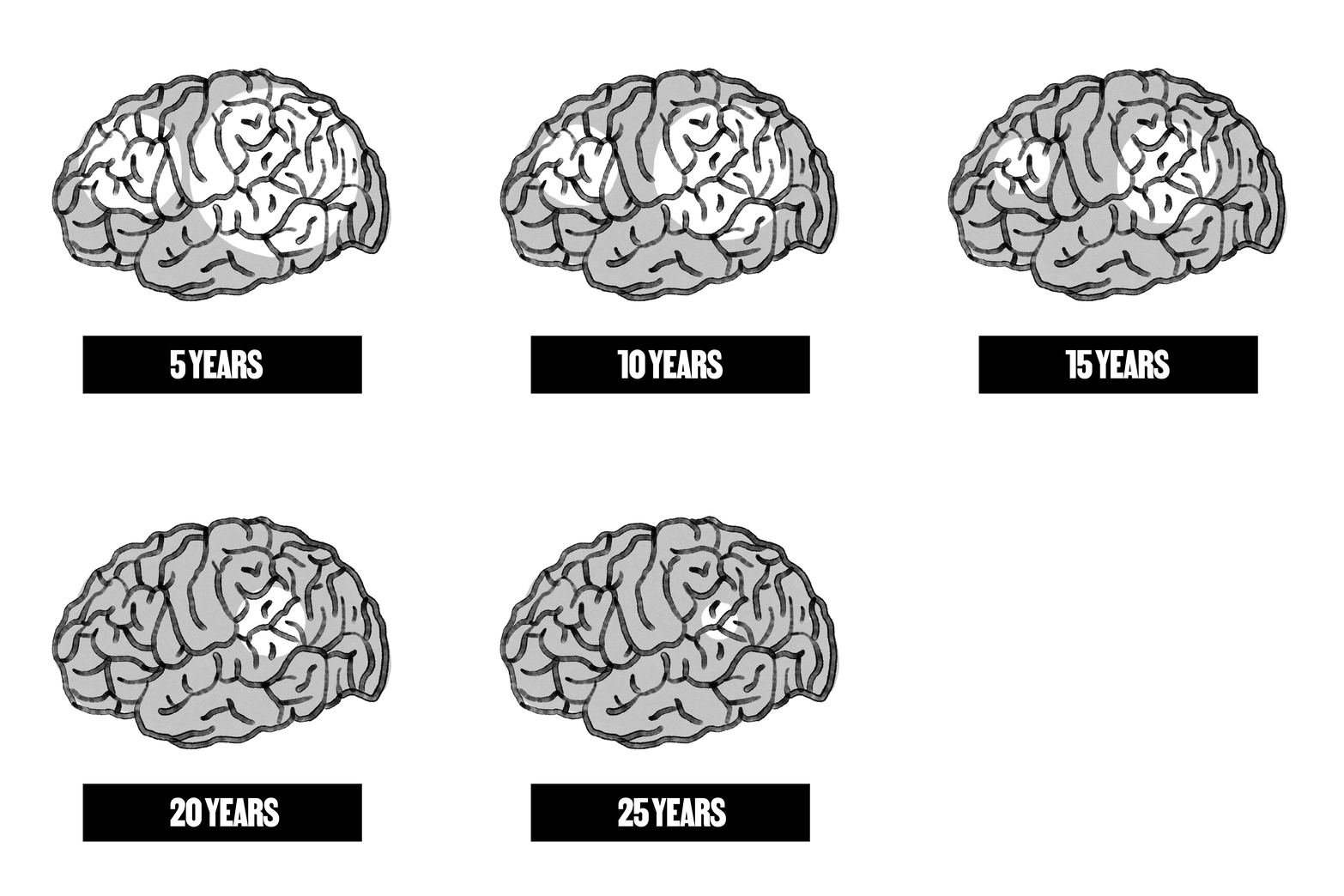
The above graphic illustrates neurological research demonstrating the progressive maturity of the human brain into the mid-20s. This graphical representation shows how grey matter volume, a major component of the central nervous system, decreases as a child ages.
The prefrontal cortex is the last region of the brain to develop, coming to maturity around age 25. The prefrontal cortex is the region responsible for personality, social behavior, and decision making – the ability to plan, understand consequences, and weigh risks. In adolescence, this underdeveloped region of the brain explains heightened susceptibility to peer pressure, outside influences, and social-emotional sensitivities.
These key elements of the developing brain underlie the “the transient immaturity of youth” and the inherent capacity for rehabilitation for the vast majority of young people – a foundation of US Supreme Court opinions in Roper, Graham, Miller and subsequent decisions regarding criminal punishment for juveniles.
Put simply, teenagers will grow up and mature. While adolescents are challenged to appreciate risks and consequences, exercise self-control and plan ahead, those hallmarks of youth will improve with age for the vast majority of people. As SCOTUS concluded, brain science supports giving juveniles who commit even the most extreme harm an opportunity for release based on demonstrated maturity and rehabilitation as adults.
MANDATORY SENTENCING
Mandatory sentencing schemes require that people convicted of certain crimes serve a predefined term of imprisonment, removing the discretion of judges to take issues such as level of involvement in the offense, extenuating circumstances, youthfulness, development, and a person’s likelihood of rehabilitation into consideration when sentencing. The mandatory sentence of life for a young person precludes forensics, any second look or opportunity to demonstrate rehabilitation.
The Social Science
Social scientists have been studying the predictors and underlying risk factors for youth violence for decades. Research across disciplines overwhelmingly concludes that youth – developing young people – are negatively impacted by chronically occurring trauma, relational chaos, anti-social environments, under-resourcing, overburdening, and limited personal agency.
When young people perpetrate violence within the community, it is most appropriate, best for public safety, and public cost to treat that young person consistent with their age. Adultifying youth – treating a young person as if they are older, more developed, more experienced, and more competent than they are – is a set up for everyone.
The social science, affirmed by the US Supreme Court in a series of landmark opinions, says that young people have an inherent capacity for rehabilitation and continued development. We have an obligation to and an interest in giving young people the support they need to realize their potential.
Moreover, punishing a child, as if they were an adult, with life sentences, in essence punishes a child harder than an adult for the same offense as a child will inevitability serve more years in prison than an adult sentenced to life at age 40, for example. A child is often punished for actions taken after years of being trapped in an environment that they cannot escape, lacking the agency and ability to leave abusive homes or problematic neighborhoods.
However, with pro-social influence, reasonable access to resources and development of healthy life skills we can expect even young people who commit the most serious offenses to mature into healthy and productive adults.
While conditions in Michigan’s adult prisons are far from ideal for any person working to become rehabilitated, each one of the people photographed for Morning From Now On – a person sentenced to die in prison for a crime committed as a teenager – is a testament to the truth of social and brain science that has led to their freedom.
Children grow up, all young people are predisposed to change and no person is disposable.
Societally, we have the tools and knowledge necessary to support the rehabilitation of young people, without incurring the high costs of sentencing teenagers to die in prison.
Felony Murder
Felony murder is a law that allows the state to sentence a person for murder if a death occurs while otherwise committing a felony crime. The person who neither killed or intended to kill anyone will be sentenced the same as the person who committed the homicide. Felony murder can be applied to any person present or participating in the commission of the underlying felony. In Michigan, felony murder is punished with the exact same sentence as first-degree premeditated murder.
Nearly a third of people serving JLWOP sentences in Michigan were convicted of felony murder, meaning they did not personally commit the murder for which they are convicted.
There are 261 people in Michigan prisons identified as serving LWOP sentences for felony murder convictions when they were 18 to 21 years old.
Criminal laws treating children as adults.
Michigan has some of the harshest criminal laws treating children as adults of any state in the country.
Only in the last decade has the state started to modify the laws, recognizing the importance of treating juveniles as juveniles. Even still, 19 juveniles have been awaiting resentencing hearings since 2012. Reform work has been slow, and some prosecutors continue to push back against the check on their power to obtain harsh sentences.
Dating back at least to the 1930s, Michigan included 17 year olds in the adult criminal code, giving prosecutors the discretion to charge 17 year olds in juvenile or adult court without any input outside of the prosecutor’s office.
The inclusion of 17 year olds in Michigan’s criminal code allowed prosecutors to bypass the juvenile system altogether, exposing these youth to extreme sentences that disregarded the notion of rehabilitation.
In the early 1900s, Michigan and states around the country created juvenile justice systems separate from the punishing adult penal system. The juvenile justice system was focused on the rehabilitation of young people in the face of violent and criminal conduct, understanding the inherent social and biological differences between juveniles and adults.

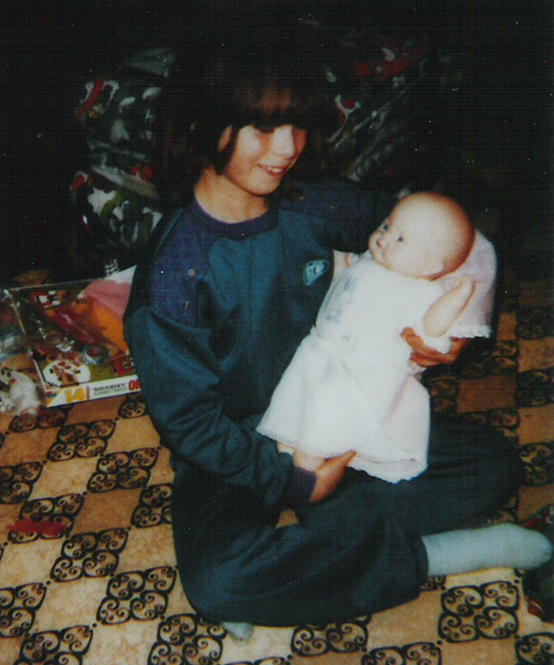
Kevin age 16 – 3 months prior to his life without parole conviction and incarceration. Kevins mother, who admitted to killing his father, initially implicated Kevin instead of her lover as her partner in the crime.
As the juvenile system became more sophisticated and the nation industrialized in _____, the “juvenile waiver” process was developed; if a prosecutor felt juvenile court and consequences would be insufficient, they could petition the court to “waive” the juvenile into the jurisdiction of the adult criminal court.
Under this process,if a prosecutor petitioned to waive a juvenile, the judge would hold a hearing. In the course of a waiver hearing, the presiding judge would review evidence and hear testimony from the prosecution and defense to determine the maturity, life circumstances, conduct, and moral culpability of the juvenile among other factors. If the judge, after weighing all evidence, concluded the juvenile – demonstrated an adult-like understanding of their criminal conduct, the judge could waive the juvenile defendant into the adult criminal court where they would be prosecuted as if they were an adult.
In the latter half of the 1980s, numbers of youth sentenced to LWOP began to skyrocket. In the era of fear-mongering led by the later debunked “juvenile super predator” theory, Michigan and a majority of states around the country expanded their automatic inclusion of juveniles in the adult criminal justice system. In 1988, the Michigan legislature expanded automatic waiver to include 15 and 16 year olds.
In 1996, the legislature again expanded automatic waiver provisions to include 14 year olds. Youth aged 14 to 17 years old were automatically transferred to adult court without any consideration of their youthfulness, development, brief life history, or rehabilitative needs.
Those laws not only allowed prosecutors and judges to legally treat juveniles as adults, in many instances juveniles in the adult system were given harsher punishments than their adult counterparts. Between 1985 and 2009, 298 teenagers between 14 and 17-years-old were sentenced to LWOP sentences; of those, 231 – or 78 percent – were youth of color and 67 were white youth. To put those numbers in broader perspective, juveniles accounted for 10 percent of all life without parole sentences issued during that period.
International Law
The United States is the only country in the world that punishes children with a life without possibility of parole sentence. No other country takes the position that our children are irredeemable, incapable of growth, maturity and reformation and should never be given a second look. At the time the United States Supreme Court determined that a mandatory life without parole sentence imposed on a child under the age of 18, was cruel and unusual punishment in violation of the Constitution, Michigan had the second highest number of children serving this sentence, in the United States.(FOOTNOTE 1)
The rest of the countries in the world have signed and ratified the Convention on the Rights of the Child and agreed to follow the law which provides that : “ No child shall be subjected to torture or other cruel, inhuman or degrading treatment or punishment. Neither capital punishment nor life imprisonment without possibility of release shall be imposed for offenses committed by persons below eighteen years of age;” Conv on the Rights of the Child, Art 37
This does not mean the world does not hold children accountable for their actions including the serious crime of homicide. Rather there is a recognition that children are not fully formed adults, in mind or opportunity. Children are often a product of their environment and societal and familial neglect. Youth are more likely to be involved in reckless and impulsive behavior that can lead to tragic consequences. The rest of the world recognized that the purpose of punishment of a child is to obtain accountability and reintegration of a child into society upon growth, maturation and rehabilitation.
To this end, international law provides that “ imprisonment of a child shall be used only as a measure of last resort and for the shortest appropriate period of time” to achieve these goals.
While the rest of the world and now the majority of states in America have recognized that throwing away our children with out any review or opportunity to grow, atone and come back into our communities upon demonstrating rehabilitation , is not fair or equitable punishment for a child, Michigan continues to have the highest number of children serving life without parole sentences in the world.
On November 19, 2021 the Organization of American States’ Inter-American Commission on Human Rights (IACHR), issued a decision against the State of Michigan for their continued violation of the Treaty of the Declaration of the Rights of Man, a binding treaty for which the United States is a party. (IACHR Findings and Recommendations, 2021)
To date Michigan has not complied with the orders of the IACHR as they continue to subject youth to the harshest punishment available for any crime committed by an adult, LWOP.
**FOOTNOTE 1: 1 The high number was not as a result of a difference in the children of Michigan but rather three laws that 1) automatically treated children as young as 14 the same as adults for criminal offenses that were subject to the harshest punishments; 2) Treating children who do not commit a homicide but were involved in a felony during which another person committed a murder, the same as the person who committed the murder; and 3) Requiring that all 17 year olds be treated as adults in the criminal courts, while remaining children for all civil rights purposes.
FOOTNOTE 2

“The reasons why juveniles are not trusted with the privileges and responsibilities of an adult also explain why their irresponsible conduct is not as morally reprehensible as that of an adult”
–
John Paul Stevens
U.S. Supreme Court Justice

At present, the Michigan Department of Corrections (MDOC) defines recidivism as “returning to prison on a new offense within 3 years of release.” For the general population, considering all individuals released from MDOC facilities in the past three years, the rate of recidivism is over 21 percent.
Among former juvenile lifers, the rate is under 1 percent. Only two of 211 people released from JLWOP sentences have committed new crimes within three years of their release. Expanding the dataset to consider all youthful offenders under age 21, the rate drops to 0.7 percent.
While MDOC only considers recidivism within the past three years, the less than 1 percent recidivism rate stands for the entire population of youthful offenders released in the past 10 years; the first release occurred in 2016.
Among youthful offender populations in other states, the recidivism statistics are similarly low. The statistics are a demonstration of the social and scientific reality that young people have an inherent capacity for change, growth and rehabilitation and their release does not impact public safety.
The statistics show that even in prison environments where rehabilitative opportunities are sparse and tactics of deprivation and punishment dominate, people sent to prison as youth overwhelmingly possess a motivation to grow up, find meaning and purpose within their lives, and learn from the past.
Today, hundreds of Michigan’s formerly juvenile lifers demonstrate their commitments to rehabilitation and well being through the positive lives they are living out in our communities. Every single person is a testament to the importance of second chances.

Victims and Accountability
In the case of every young person who has been sentenced to die in prison for a homicide offense, there is a person who has been killed. For every such crime victim, there are many other people impacted by the loss of that person and the violence enacted in their community.
Surviving crime victims are not a monolith and victim/perpetrator is not an honest binary; there is not one victim experience or “profile.” Every single crime leaves impacts on the community in a variety of ways and to varying degrees for each person and place depending on the contexts of the crime. Crimes happen within families, neighborhoods, and communities.
The notion that “justice” is locking a young person up for the rest of their life is overly simplistic and short sighted; it does nothing to facilitate accountability or repair for crime victims or the broader impacted community. The prison system functions to isolate, disconnect, and deprive people of connections and resources, often leaving crime victims and communities with unanswered questions, unresolved trauma. It is incomplete justice.
Accountability, on its face, is the ability to take account and responsibility for one’s actions. Building on that account, a person can then work to understand the harm caused and steps that can be taken to address past and prevent future harm. For many current and former JLWOP youth, they were also victims of crime. They were themselves victims of violence, and harm within their own communities before ever being convicted of a crime. Taking a meaningful account of the life an offending person has lived is a critical element to understanding how rehabilitation and repair can be achieved, even decades after a crime has been committed.
Preparing for a parole hearing, resentencing or other “meaningful opportunity for release” requires accountability work. In the process, many individuals work with advocates to understand and address both the harm they have experienced, considering how it contributed to their own capacity to commit violence and cause harm to others. Doing that work opens up new capacities for pro-social impact and healing. Many youth have become leaders within their own communities inside of prison, working to break cycles of violence and enact culture change, living and modeling healthy, values-driven decision making.
Overwhelmingly, youth who have been released into the community have continued work that gives back, creates opportunities for healing, and aims to prevent future violence and incarceration of today’s young people.
Every single crime has an impact and evolving standards of decency cannot leave victims behind. As we abolish notions of lifetime punishment and deprivation as “justice,” we expand opportunities to meet the needs of victimized people, keep vital resources within impacted communities, and create opportunities for accountability that promote restoration of safety, trust, and well being for all impacted people.